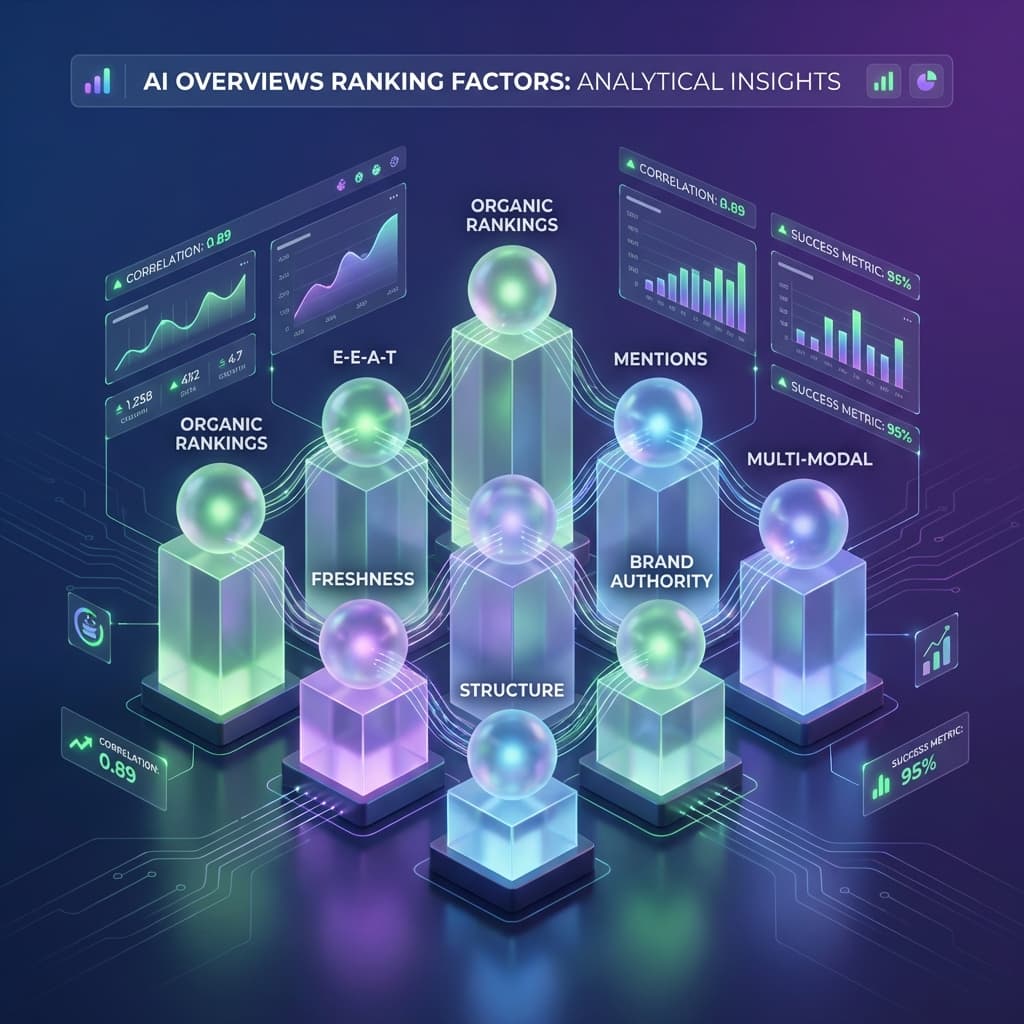
AI SEO strategy in 2026 means optimizing for both rankings and recommendations. You still need strong SEO fundamentals, but you also need to influence how AI systems mention your brand in generated answers.
If you only optimize for blue-link rankings, you miss users who research through ChatGPT, Claude, Perplexity, and Google AI Overviews before they ever click a traditional result.
What an AI SEO Strategy Includes
A practical strategy has four layers:
- Visibility baseline - Know where AI mentions you today across high-intent prompts.
- Content architecture - Build pages mapped to real questions buyers ask AI.
- Authority signals - Increase trusted citations and third-party mentions.
- Iteration loop - Improve monthly using citation rate, position quality, and sentiment.
Step 1: Build a Prompt Baseline
Start by testing the exact prompts your buyers use:
- "best [category] tools for [use case]"
- "[competitor] alternatives"
- "how to [desired outcome] with [category]"
- "[category] pricing and ROI"
For each platform, track:
- Mentioned or not mentioned
- Recommendation position (primary vs alternative)
- Sentiment (positive, neutral, negative)
- Competitors named in the same answer
This baseline tells you where your biggest revenue leaks are.
Step 2: Create an Intent-Mapped Content Cluster
Most teams publish disconnected posts. Instead, use a cluster:
- Pillar: "Generative Engine Optimization Guide"
- Supporting guides: ChatGPT SEO, Perplexity SEO, LLM SEO
- Commercial pages: tool comparisons, alternatives, pricing explainers
- Proof pages: case studies and benchmark data
Each piece should target one primary keyword and one clear buyer intent.
Step 3: Optimize Content for AI Retrieval
AI systems favor content that is easy to parse and trust:
- Use direct question-style headings.
- Add concise answer blocks near the top of sections.
- Include original data, examples, and explicit source context.
- Keep definitions and comparisons unambiguous.
- Refresh outdated statistics and claims.
SEO formatting still matters (title, H1, internal links), but AI visibility improves fastest when content is structurally clear and evidence-backed.
Step 4: Build Off-Site Authority
AI engines heavily rely on third-party signals. Prioritize:
- Mentions in credible industry publications
- Relevant listicle inclusion
- Review profile quality and recency
- Community references (where authentic and useful)
If your competitors are repeatedly cited in external sources, AI will usually mirror that authority bias.
Step 5: Measure with AI-Native KPIs
Traditional traffic alone is not enough. Track:
- Citation rate: % of target prompts where your brand appears
- Position quality: primary recommendation vs secondary mention
- Sentiment score: how AI describes your brand
- Engine coverage: consistency across platforms
Run a monthly cycle:
- Re-test core prompts
- Compare movement vs competitors
- Update top pages
- Publish one net-new piece for uncovered intent
Common Mistakes to Avoid
- Publishing "AI content" without a keyword or intent map
- Optimizing only homepage copy
- Ignoring comparison and alternatives pages
- Measuring only Google traffic, not AI mention share
- Waiting for perfect attribution before executing
30-Day Rollout Plan
Week 1:
- Build prompt list and baseline report
- Identify top 3 missing commercial intents
Week 2:
- Update 3 existing pages for intent + clarity
- Improve title/meta targeting on highest-impression URLs
Week 3:
- Publish one strategy guide and one comparison page
- Add internal links from pillar to new pages
Week 4:
- Re-run prompts
- Prioritize next month based on gap score and opportunity
AI search is now part of buyer discovery. Teams that implement a repeatable AI SEO strategy early gain compounding advantage.
Want a baseline first? Get an AI visibility audit and use it as your strategy starting point.